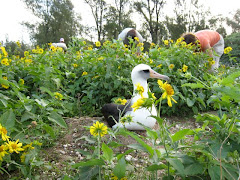
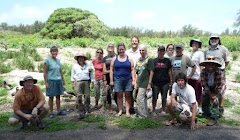
Welcome to the PAA Blog

Papahānaumokuākea 'Ahahui Alaka'i (PAA) is a ten-day experiential leadership program that brings together teachers, business people, policy-makers as well as potential community leaders interested in learning and being inspired by science and traditional knowledge management practices. Papahānaumokuākea Marine National Monument encompasses roughly 140,000 square miles of the Pacific Ocean, an area larger than all the country's national parks combined. The area around the Northwestern Hawaiian Islands is an important safe haven for wildlife such as the threatened green turtle and the endangered Hawaiian monk seal. ‘Ahahu‘i refers to society, club or association. Alaka’i is Hawaiian for ambassador or leader. The Hawaiian word /acronym PA‘A means steadfast, learned, determined, strong, to hold, keep, retain.
Showing posts with label marine debris. Show all posts

Tuesday, August 17, 2010

Our Ocean, Our Choice


Post for Saturday June 19, 2010

Our Ocean, Our Choice
By: Sarah Wilson

Every day on Midway we open our day with a special oli (Hawaiian chant) to prepare our group for learning and openness. One morning this week Nai'a mentioned how amazing it is we are here together by choice. We chose to apply for PA'A last winter, they chose to accept us out of their copious stacks of impressive people, and we all chose to fly to this remote island archipelago in the middle (and I mean MIDDLE) of the Pacific Ocean. So here we are on our last day together on Midway and we continue to reflect on our choices....our choice in how to carry this unique experience with us in our daily life and how we will educate others. Our sessions help provide us with the content knowledge we need, while our "free" time is our personal exploration and adventures around the island that definitely fosters knowledge and inspiration. One of our sessions was exploring change in our oceans health. Robin Kundis Craig is a fellow PA'A member, environmental lawyer and professor at Florida State University College of Law in Tallahassee. She spoke to us about climate change, Marine Protected Areas (MPA's), and how the law and governance is involved in the conservation of species and ecosystems. The ocean is facing a variety of stressors from overfishing to marine debris and these combined impacts can take their toll. Add to the mix a steady change over time in climate and the combined resource use stressors and this can cause serious damage to ocean ecosystems.

Environmental law does not regulate the environment, it regulates humans. The law has to be tied to direct and indirect effects of what humans do to the environment. It is easier to prohibit a particular behavior in advance, such as oil extraction in a certain area, than it is to mandate later on in the form of habitat restoration after an oil spill. When measuring ocean use, money value is placed on ecosystem services, or the resources that ecosystems provide. Across the globe $33 trillion is provided from ecosystems and 2/3 of that value is from ocean ecosystems. With this numerical value now placed on the value of a healthy ocean….it would make sense that we want and need a healthy and productive ocean. What are the management steps Robin recommends to have this?

1.Pollution prevention….all types of pollution such as large plastics, derelict fishing gear and large scale chemical discharge and every day runoff from land.

2.Fishing regulations that are more conservative than those found now.

3.Create global Marine Protected Areas (MPA’s) which are similar to underwater national parks.

4.She advises most important is to admit that the old ideas of what is sustainability don’t work anymore and it is time for new ideas and new choices.

These regulations can contribute to a productive ocean…..but what about climate change? One major threat is the increase of carbon dioxide (CO2) in the atmosphere, and the ocean absorbs this CO2. This increase in CO2 in the ocean rises carbonic acid, making the oceans more acidic. Just like too much acid in the human body can cause issues it does in the ocean as well. From ocean animals forming week shells to coral skeletons growing at an extremely low rate ocean acidification has far reaching impacts.

So what are the top 2 things to practice to help reduce the combined harmful impacts the ocean is facing?

1.Use less…less plastic, less power, less driving.
2.Recycle plastics and papers and reuse items whenever possible.

Every day is a series of choices. What will yours be to help protect and restore the ocean?

Mahalo for joining us,
Sarah

Links to learn more:
Avoiding Jellyfish Seas, or, What Do We Mean by ‘Sustainable Oceans,’ Anyway? Article by PA’A member Robin Kundis Craig Professor with the Florida State University College of Law. Visit the Social Science Research Network to read abstract and download complete article.

http://papers.ssrn.com/sol3/papers.cfm?abstract_id=1658109


The Ocean Takes Care of Us, Let’s Return the Favor …The ocean is a vital resource that provides food, water, commerce, recreation, medicine and even the air we breathe. Today, our ocean faces unprecedented threats from pollution, trash, declining fisheries and multiple impacts from climate change.
http://www.thankyouocean.org/


National Geographic Ocean Portal
Visit our new ocean site to dive into all things blue! Explore the sea through our rich media collection, learn about ocean issues, news and how you can get involved in conservation efforts.

http://ocean.nationalgeographic.com/ocean/

Wednesday, July 7, 2010

Reflections from the PAA Group

Participants from the PAA group have been asked to sit, back, relax, and reflect on their journey at Midway Atoll. The first reflection to come in is by Al Braun.

REFLECTION 1
by Al Braun

Flying a cardiac patient to Queen's Medical Center, I look out the window westward at the painted sky at sunset. My mind drifts back to our time on Midway Atoll. It's been a week since we returned, but it seems much longer.

Everywhere I looked over the last seven days there have been reminders of that special place: spinner dolphins in the water off Honokohau harbor, pictures of ulua in the doctor's office, coral on a show on the Discovery channel, and honu grazing on seaweed near the shore in Keaukaha. Each image evokes feelings and emotions that overwhelm me.

Not all of the feelings are positive. I see a myna bird carrying a piece of rubbish and think of moli chicks with their stomachs full of plastic debris accidentally fed to them by their parents. I walk through a store and see a plethora of plastic products. I wonder how many of them will eventually find their way to Pihemanu's shores.

My efforts to conserve resources, recycle, and be a more conscientious consumer have been exponentially increased. Sometimes I feel like I'm proselytizing when I tell anyone who will listen about the things I learned during this experience. When I talk about Hawaiian values, it's no longer some ethereal subject, but a practical way of life.

My life has been changed in ways that I never thought possible. I have embraced my past and look toward the future with hope and determination. I know I'll never be the same.

Thursday, June 17, 2010

Albatross Stroll Module


Day 2- Albatross Module by R. Brennon

Can’t believe its Wednesday already! We’ve been on Midway now for two whole days. It’s my job to blog about our adventures this morning.

We were very fortunate to have John Klavitter, of FWS, talk to us about the albatross (or moli). He’s extremely knowledgeable, and he’s also extremely approachable – a wonderful combination. John has years of experience with the albatross and he happily answered all of our questions. It was good planning to meet with John on our second day on island, in that it gave us a deeper understanding of these amazing creatures we’re all conscientiously weaving around all day (everyone moves for the albatross – the golf carts, the bikes, the walkers –everyone). We learned a bunch of things from his talk. There’s too much to put into a blog, but here's just a couple of the facts that I thought were interesting:
There are 1.5 million albatross on Midway
There’s a chemical in the albatross’s eyes that gives them the ability to see at night
There are four common threads between the courting dances of different species of albatross: spreading wings, standing up on tippy toes, making some sort of call, and clacking their bills
Albatross chicks don’t produce their first bolus until they are about 4 months old…so that means that they collect a LOT of plastic in their gut through feeding

We've been learning about the albatross on our own, as well. We can't help but observe them as we move around the island. They are scattered everywhere, chicks sitting within a beaks reach, juveniles strutting about looking for love, hard working adults landing like jet planes in the middle of a block party. Juveniles erupt in spontaneous dances in groups of two or three or four. An earthen sea of endless somber chicks stretches to the horizon. The chicks look as if they've started getting dressed up in feather boas and wacky wigs, but quit halfway through their preparations. It would be impossible to go anywhere on the island and not look at the albatross.

They are amazingly big birds. Here's a picture to give some sense of scale...and remember, this is a fledgling, not an adult. The chicks sit back on their haunches, raising their feet up like they're lounging in reclining chairs no one else can see. They sit and patiently wait for their parents to bring their next meal. The adults move both through the air and on the ground. They are ungainly on land, waddling around on their big spatulas of feet, but once they hit the air they soar. Sometimes the chicks and adults seem to cuddle, sitting close to each other and touching each other gently.

All day long and into the night, the albatross make me laugh...not at them, but with joy. Their beauty and grace and clumsiness and goofy looks and lack of fear and novel voice all combine to create a creature impossible to ignore. They deserve our respect, and they deserve our efforts to stop impacting them negatively. One small choice by each person who reads this to change their habits in using and buying plastic can make a difference. It WILL make a difference. My choice is never to buy another plastic lighter. I've seen too many here on this island, and I know the path those lighters took to get here.